garden log : mating dragonflies


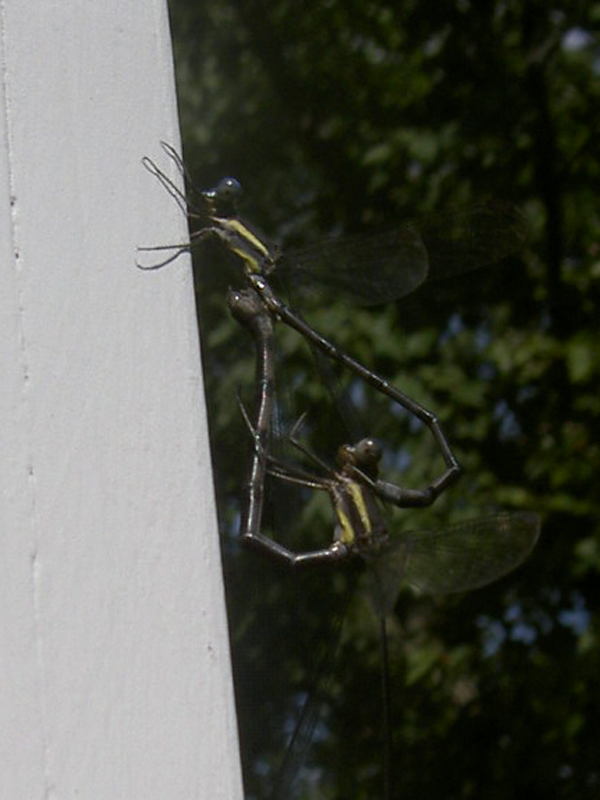
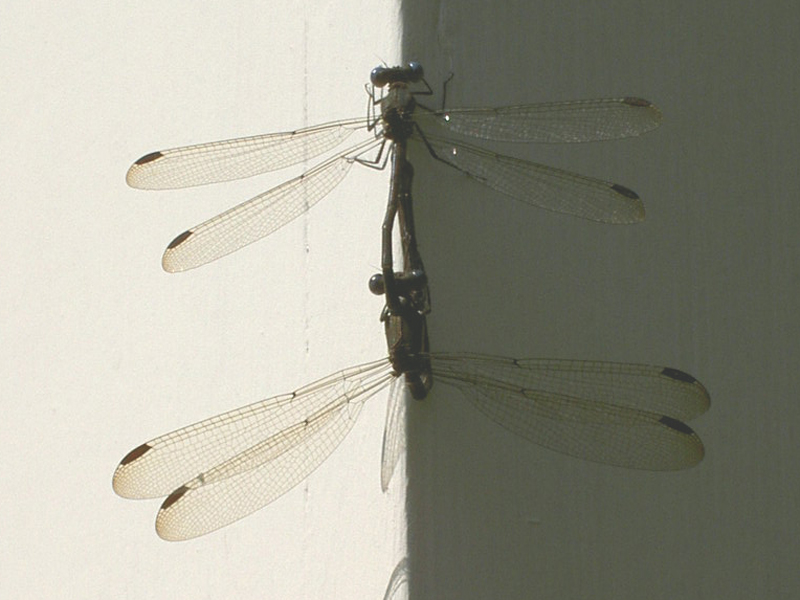
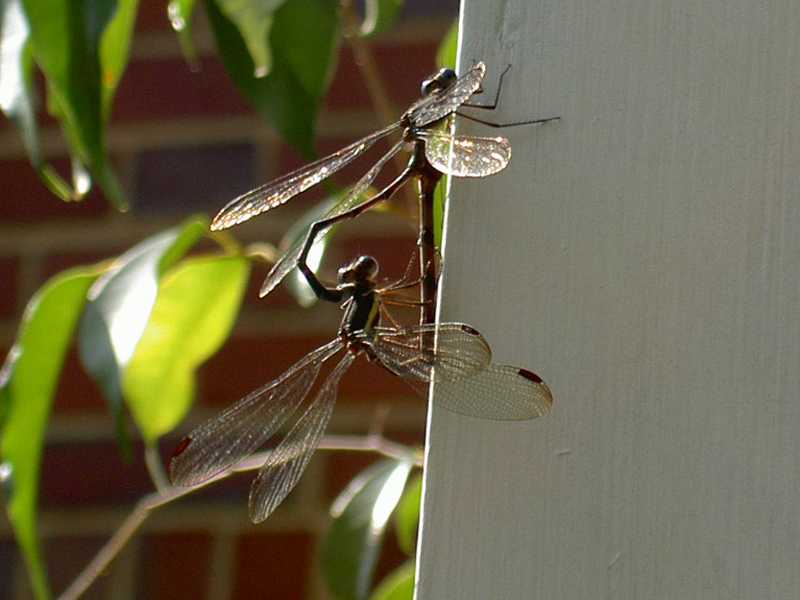
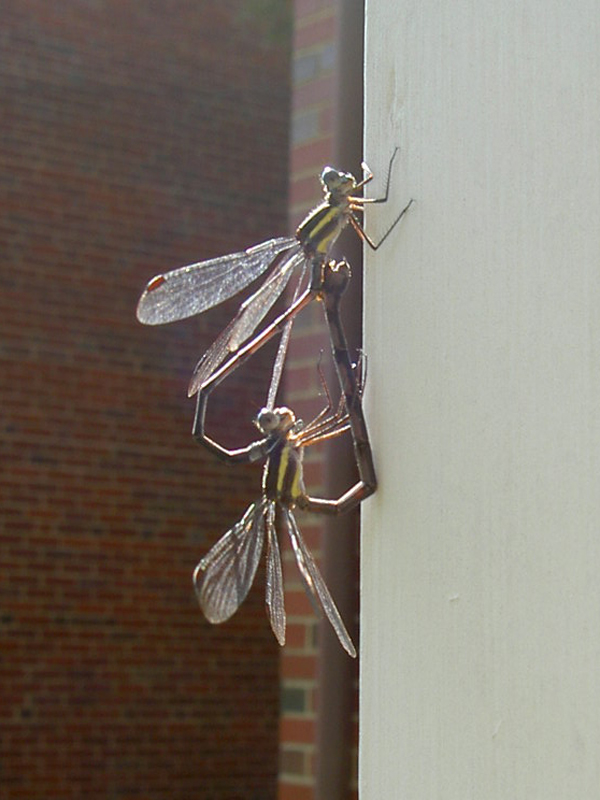
Dragonflies mating on our porch post.

I went outside this afternoon to enjoy the unseasonably warm day, and after my mole eyes adjusted to the sun, I noticed a pair of dragonflies mating on our porch. These dragonflies have been around the yard for a while now, and I also see them in the town park. Which is great, because it means our stream is both clean and wet enough to support dragonflies (the overgrowth along the edges is apparently also ideal for them to do their hanging thing when they’re young).

Despite having purchased a dragonfly identification book, I have not been able to figure out what kind they are. For example: is that a clubtail? This is the first time I’ve ever tried to identify a dragonfly beyond those really obvious white-winged blobby ones that I see at the pond, and I’m a bit overwhelmed by the choices. So, please feel free to identify them for me! I’m in Maryland, they’re mating in October, and the water habitat nearby is a creek bed that is mostly fed by storm water. Go to town!


Still mating.


More mating.


And still more mating.

garden log : mating dragonflies

persimmon cookies


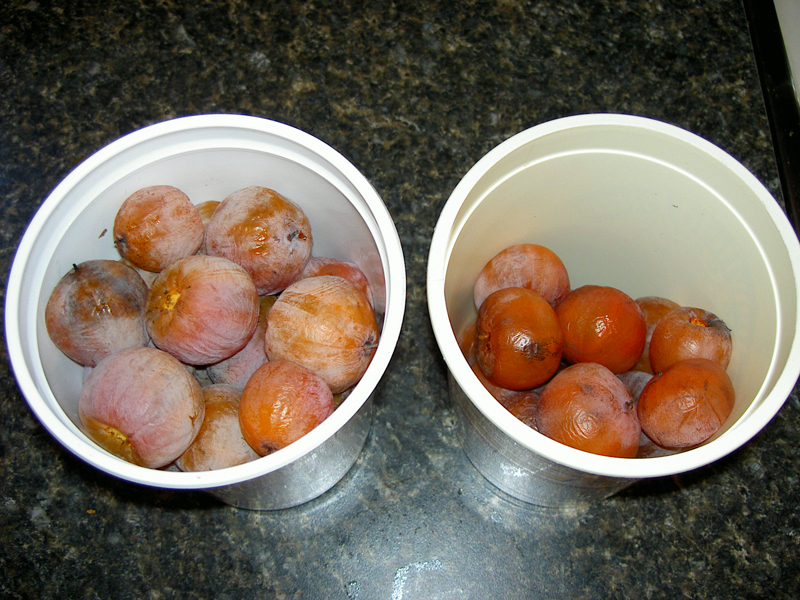
Wild persimmons.

Last year we foraged wild (American) persimmons from an undisclosed location in our county. All the hippies we know seemed to be wild about the fruit, and having stumbled across a few trees we decided to give them a try. Persimmons being extremely astringent when not quite ripe, it was hard to gain a sense of what the fruit actually tasted like. But I collected them, made sure they were soft, and mushed them through a strainer (a process that took several hours to glean a total of two cups of pulp, making me suspect that the thrill of the chase has more to do with their underground popularity than any aspect of the fruits themselves).

Having collected the fruit in that way, I stuck the pulp in the freezer and tried to find out what to do with them. There seem to be two ways to use persimmon pulp: (1) in an English-style Christmas pudding and (2) in cookies. Because the pudding recipes I could find were heavy on the milk and best served with whipped cream, I was hesitant to go there. I didn’t want to waste my hard-scavenged persimmon pulp on a modified recipe that risked being terrible, but neither did I want to commit to something that I wouldn’t be able to eat. Also, cookies seemed kind of boring.

I stayed in this persimmon limbo for a year, and finally decided that I needed to make something with the pulp, if only to decide whether to forage again this year. After scouring the internet — by which I mean ‘using Tastebook‘ — I came up with two recipes for my first attempt. One is an English-style pudding, liberal on the brandy, which I’ll test when it gets cold and possibly make for my birthday (just as soon as I figure out how to rig up the steaming container). The other is a spice cookie recipe, advertised as ‘an old family recipe’ which I am hopeful means it was designed for use with native persimmons. The cookie recipe I made last night, with much effort — I locked up my touchy shoulder mixing up the dough; I recommend a mixer — and not a small amount of trepidation. The cookies turned out well, though, much to my relief. Substituting in canola oil and egg beaters worked fine; the persimmon flavor is not strong, but the texture is nice so even just as a spice cookie they’re enjoyable.


Persimmon cookies.

persimmon cookies

don’t let them kill our wolves, government dudes!

Over the past 13 years, the federal government has spent $27 million on the restoration of gray wolves in the United States. Western states have also spent money, although it’s hard to identify the costs related to wolf reintroduction specifically versus things like public land management and rangers generally. With about 1,500 gray wolves now living in the lower 48 states as a result of this program, the publicly owned animals have a value of about $18,000 each: about what it would cost to buy a regular thoroughbred race horse.

Please, government officials unto whom we entrust the responsibility of wise management of public resources: do not allow folks to kill our valuable public property for anything less than $18,000 cash in hand.

don’t let them kill our wolves, government dudes!

garden log : praying mantises


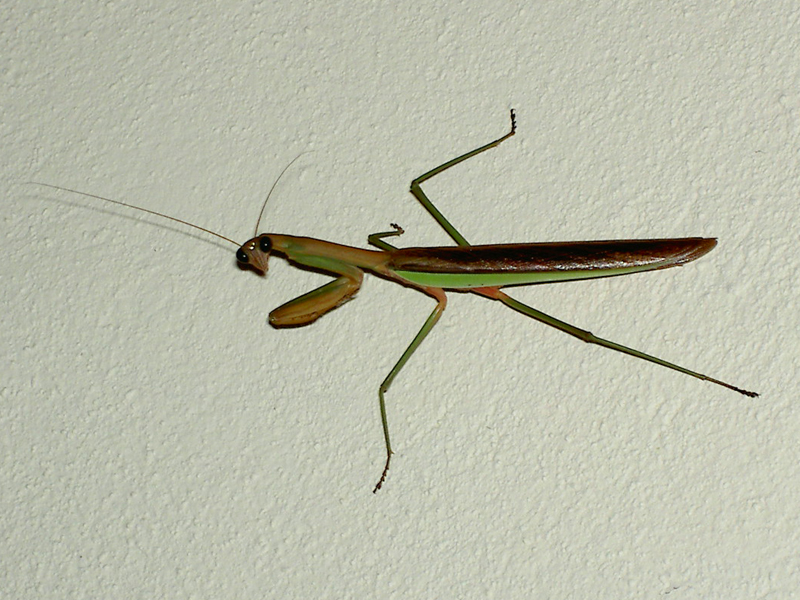
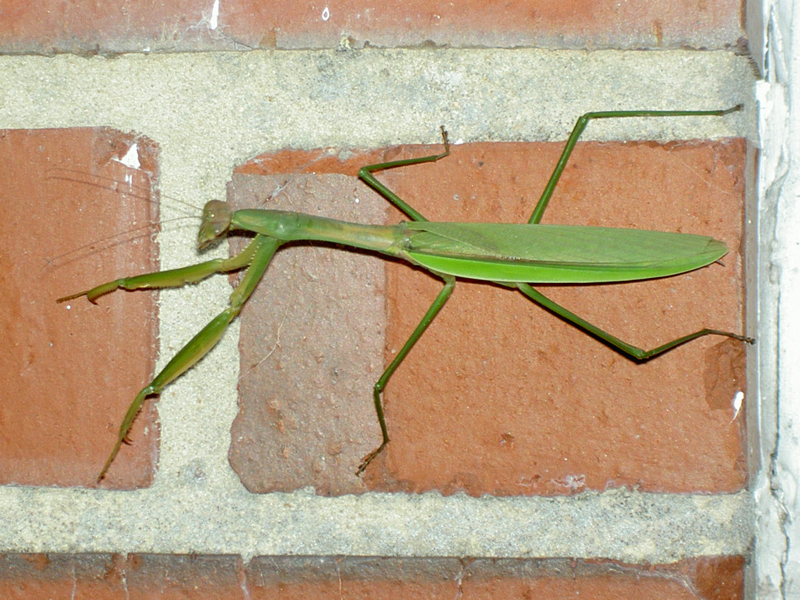
Praying mantis on the front porch one evening last week.


Praying mantis on the back wall this afternoon.


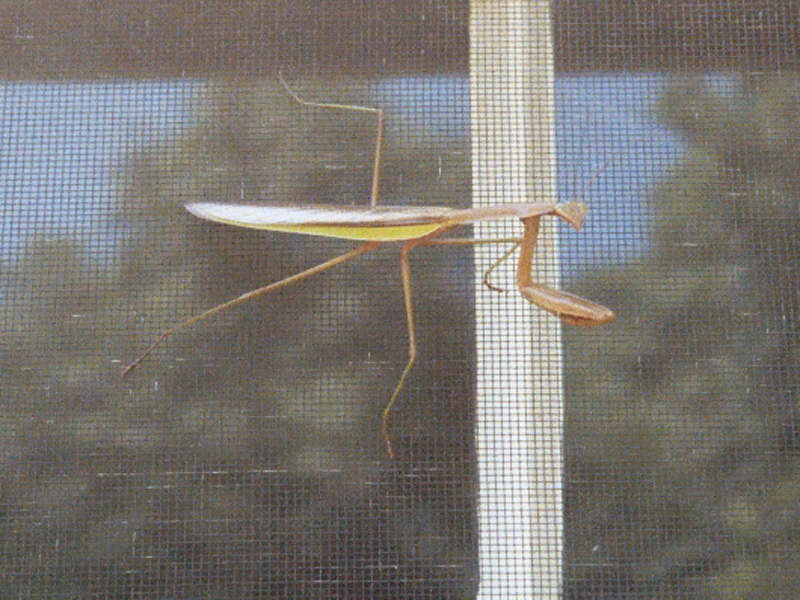
Praying mantis on the front window this time last year.

I was delighted to catch sight of mantises of two different colors in our yard this year, although probably both of a single species. The brown color and the lateral stripe, plus the fact that they are enormous, indicate that they are likely Chinese mantises. Mantises are excellent predators, and as I’ve noted in the past, our yard can use all the insect predation help it can get. It’s true that they will eat any kind of insect they can catch, so I’m hoping they’ll focus on the crickets and leave the other predators — cicada killers and ladybugs in particular — alone.

Now that I know what their egg sacs look like (thank you, interweb!), I’ll keep an eye out for it on or around the house and not mistake it for a wasp nest, which I think I’ve done in the past. Plants and insects are not my forte, but I’m learning. Now, if we had some toads to eat the hosta’s slugs, those I would know what to do with!

garden log : praying mantises

garden log : insects


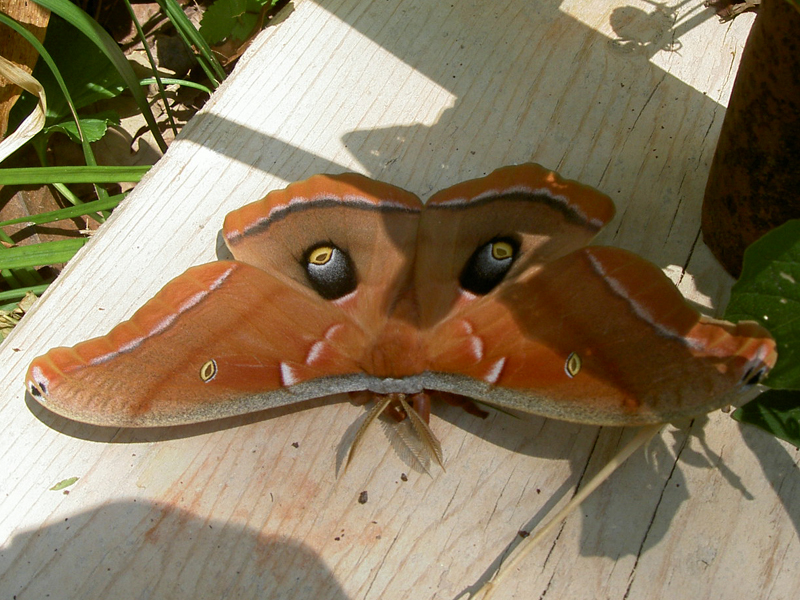
Male Polyphemus Moth in our backyard.

This has been a great summer for sighting large insects in our backyard! I can’t take too much credit, as they’re attracted to food sources already present that I simply leave alone. The cicada killers love our yard, possibly more so than other sandy-soiled backyards in our town because I don’t use pesticides on our lawn which makes the ground a friendly habitat for them to make their burrows. I imagine they can find cicadas pretty much anywhere, but clean ground is more rare out here in the suburbs. We’ve had several swooping around our backyard these past couple of weeks, and little hills of dirt are starting to pop up. Not to be confused with the mole mounds that are also appearing, although I’m now wondering if some of last year’s hills that I attributed to the mole were actually from the wasps. For the first time this year I also spotted dragonflies in our yard, which tells you how bad the mosquitoes have been around here. Not just in our yard: on a recent walk through the town park, I saw at least a dozen dragonflies and damselflies swooping over the grass.

The most exciting find, however, was something totally new. Yesterday, the contractor who’s repairing our rear wall alerted me to the presence of a male Polyphemus Moth outside on his scaffolding. While I’ve heard all about these giant moths that don’t eat and die shortly after breeding — the Luna Moth being the most celebrated — I’d never seen one before. I can see why people get so excited about them: they are so cool! Besides being as big as my hand, the predator wing-snap reflex is something else. One small twitch of a neighboring leaf as I tried to get a better photo, and BANG out come the wings with the little cat eyes staring right at me.

This is the second insect I’ve seen this year that prefers sassafras for food. We have a small sassafras tree on the south side of our house, and two saplings springing up next to it. Sadly, the sassafras is in the area that might have to go the way of a dead tree if we decide to do exterior waterproofing work around our house. For now, though, it’s apparently providing habitat for not just an enormous moth but the Spicebush Swallowtail, several of which I’ve seen in our yard this year. The moth apparently also enjoys quince leaves, so it’s possible it was hanging out in the small grove of those this summer.

Besides these exciting newcomers, we have a gazillion crickets in the lawn, which means I am constantly startling little flocks of sparrows up out of the grass when I go outside. The odd Jiminy-type cricket makes its way into the basement — by which I mean LARGE — and when that happens we rescue it from the risk of the glue-traps (set out for the completely squicky camel crickets to meet their slow dooms) and toss it back into the lawn for the birds. Speaking of birds, having sprayed for the Eastern Tent Caterpillars this year, the cherry trees were healthy enough to actually set fruit, and we have loads of birds munching away in the heights. All of which assures me that I am providing plentiful food sources even with the discontinuation of my bird feeders following our various rat and cat problems.
garden log : insects