garden log : what a difference a week makes


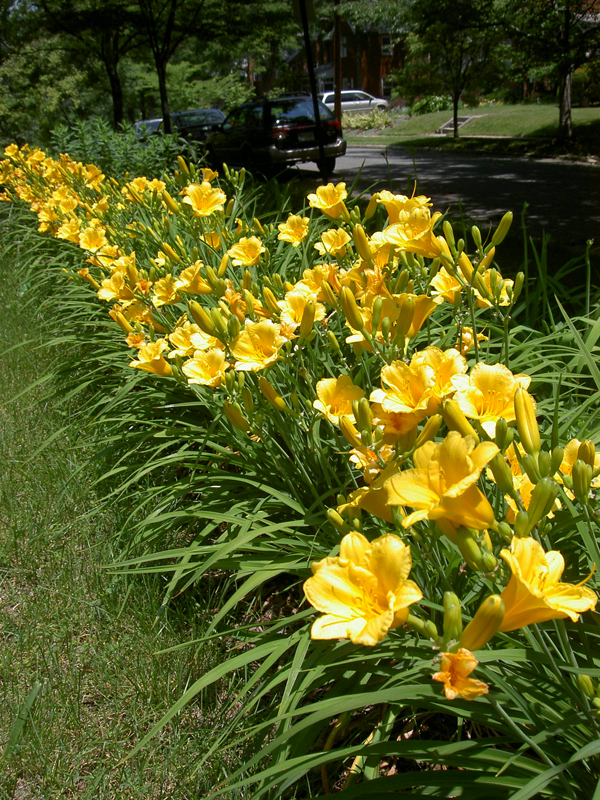
Blooming row of yellow daylilies at the top of the front bed.

We returned from our trip this week to the sight of our yellow daylilies in full riotous bloom. They had started to bloom before we left, but the five days of rain and sun did them good and they are magnificent now. At some point I’m sure they’ll need to be thinned and I might break up the monotony with some other plants, or at least different varieties in various shades of yellow and orange. For now, though, I’m just enjoying the bright swathe of color. There’s really no comparison to how they looked last year; this spring’s rain and the additional year to become established have made them into a veritable wall of flowers.

Our days away have also made it possible to see the impact of the herbicides on the patches of poison ivy that we’re working to eradicate from the yard. Not much, as the case may be: we’re definitely going to need to reapply, possibly several more times through the summer. Ah well. Despite the claims of the label — and the exhortations to phone poison control of any of the spray whatsoever comes into contact with any part of my body — I suspected that our ivy might not be so easily vanquished. No rush, though. If not this year, next year; poison ivy is nasty enough that I won’t be giving up so easily.
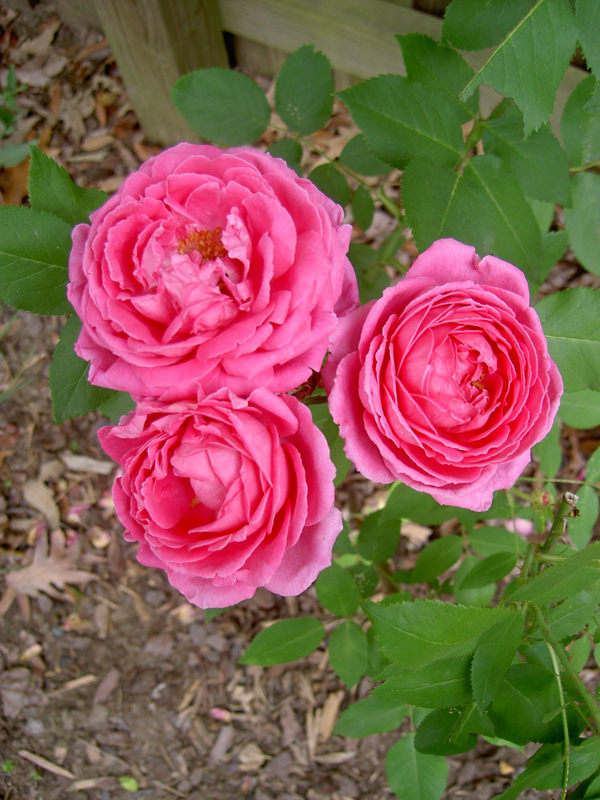

Three blooms on the Louise Odier rose.

Sadly, our week away meant we missed the last of the wonderfully fragrant Louise Odier blooms. Perhaps the bush will bloom again later in the season; this will be summer I learn as much as I can about the roses I’ve inherited. I plan to pick the brain of a gardener acquaintance on the verge of retirement, during the three days per week he’ll be at home. Hopefully between his advice and books from the library I’ll be able to develop a strategy for moving the bushes without killing them come autumn. For now, I enjoy the multitude of blooms on the Blaze bushes and work on sketching out plans for my little island bed of herbs.

garden log : what a difference a week makes

new life birds in London (Ontario)

I spent most of this past week visiting family in the hospital on Western’s campus in London (Ontario). While there, I took the opportunity to walk along the Thames and check out the breeding birds. Many were familiar — Yellow Warblers, House Wrens, Grackles, Robins, Chipping Sparrows, Catbirds, and a Great Blue Heron — but we were lucky and persistent enough to see a few new ones. On the second day of our afternoon walks, we tracked a pair of Great Crested Flycatchers along the path; they were making plenty of noise, but the gray light made identification difficult at first. Once we got a good look at the dark crest, wing stripes, and yellow belly things were a lot easier. We also spent what seemed like an ungodly amount of time craning upwards at what we eventually resolved was a male American Redstart. He landed on a perch near us long enough to get a good look, even turning around several times to display his plumage from all angles as if he despaired of us ever identifying him on our own.

The next day we returned hoping to get a repeat performance, but they never reappeared. We did spot the nests of several different birds — one complete with babies — and located an Eastern Wood Peewee on the way back along the trail as well as a male Baltimore Oriole hanging out above a squawking juvenile hawk, completely unperturbed. The peewee, with its light yellow chest, was quite fun to watch flying out after bugs, and the oriole was a nice first sighting for my partner. We didn’t return the next day; temperatures hit 90F and that was just a bit much to be tromping through the woods at the height of the afternoon. Nonetheless, every new bird, however common, is a nice addition to the lifelist and I’m pleased to have seen some of the woodland species.

In addition to the birds, I was pleased to come across numerous toads hopping into the shady underbrush, most likely a combination of American and Fowler’s. We also spotted enormous soft-shelled turtles — dark brown shells, light limbs, pointy up-turned noses — which were likely Eastern Softshells (judging from the maps in my Peterson’s guide, which I still haven’t learned to take with me on these trips).

The next task is to update my records to reflect all of these new sightings, a task which is suited to 90+ degree weather!

new life birds in London (Ontario)