spring birds in the park

This has been a good spring for seeing birds in our local park. In addition to the pair of Yellow-crowned Night Herons that returns each year, we have two and possibly three pairs of Mallards nesting along the stream. During my morning walks with the sprout, I’ve seen the usual suspects (Northern Flickers, Red-bellied Woodpeckers, Eastern Phoebes, Northern Cardinals, Northern Mockingbirds, Catbirds, Blue Jays, American Crows, Grackles, Carolina Wrens, Song Sparrows, House Sparrows, Starlings, American Robins, Carolina Chickadees, Downy/Hairy Woodpeckers, Mourning Doves, and American Goldfinches) as well as some fun surprises. We’ve come across Brown Thrashers, Yellow-rumped Warblers, a Common Yellowthroat, and Wood Thrushes foraging in the brush along the stream banks. There was a pair of Red-shouldered Hawks hanging around for long enough that we thought they might be nesting, but we haven’t seen or heard much of them lately. One day we walked along behind a Pileated Woodpecker going from tree to tree; now that the woods north of town have been demolished, I doubt it will be able to find suitable habitat nearby.

While I’m always happy to see birds, I’ve been thrilled to find frogs in the stream! So far I’ve only been able to spot bullfrogs, but I have high hopes for more diversity in years to come. We’ve also startled several bunnies (making the sprout cackle with glee) and seen one or two groundhogs in our travels. No luck yet with our nocturnal friends, although I’m pretty sure something (possum? raccoon? fox? skunk?) is visiting the side yard to chow down on the mulberries.

Now that summer is kicking into gear, I need to think about incorporating a bird bath into my plans for the garden. It’s getting hot out there and the little fluffballs of sparrow, cardinal, blue jay, and robin that we’re starting to see are going to need a place to cool off.

spring birds in the park

illegal dumping in our local stream


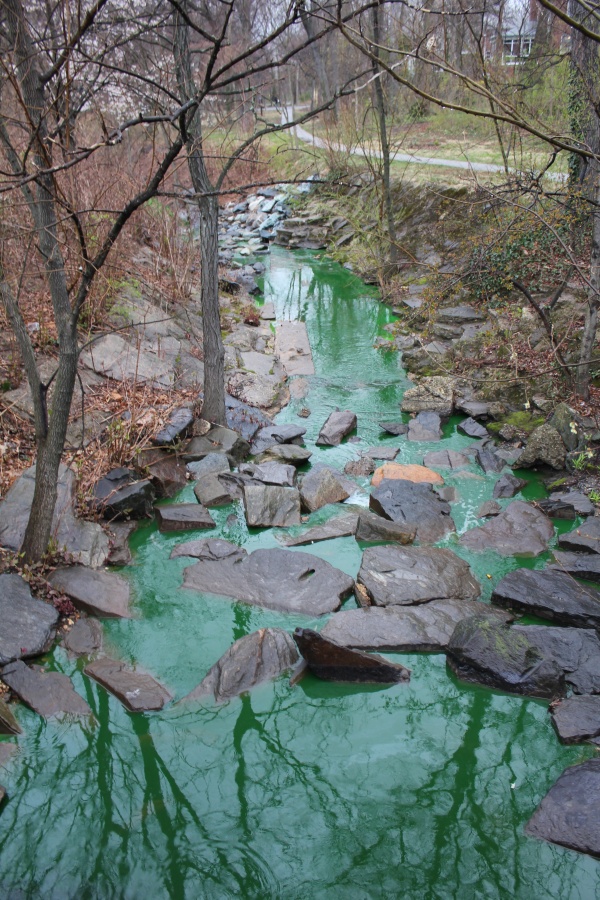
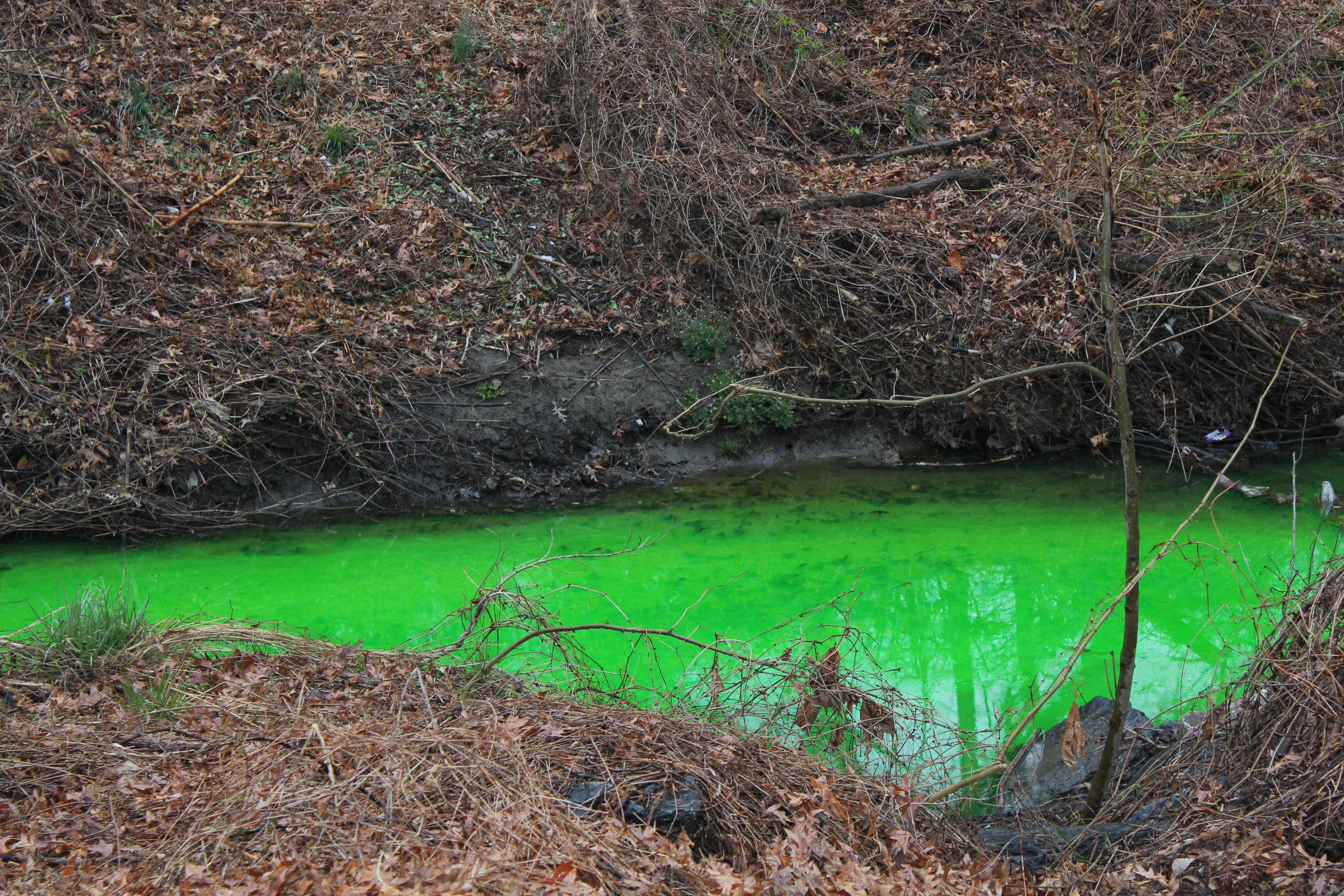
The startling green stream at 5:30pm.


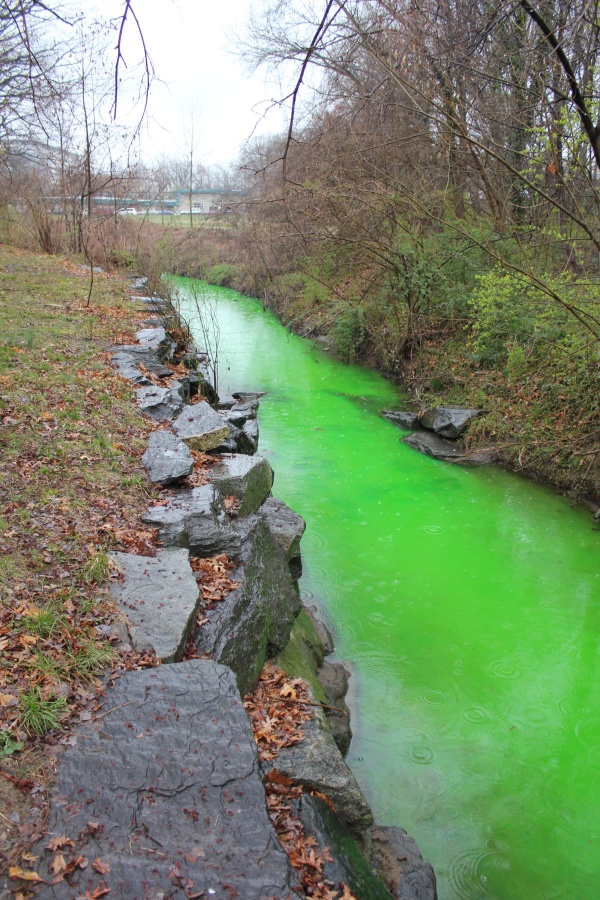
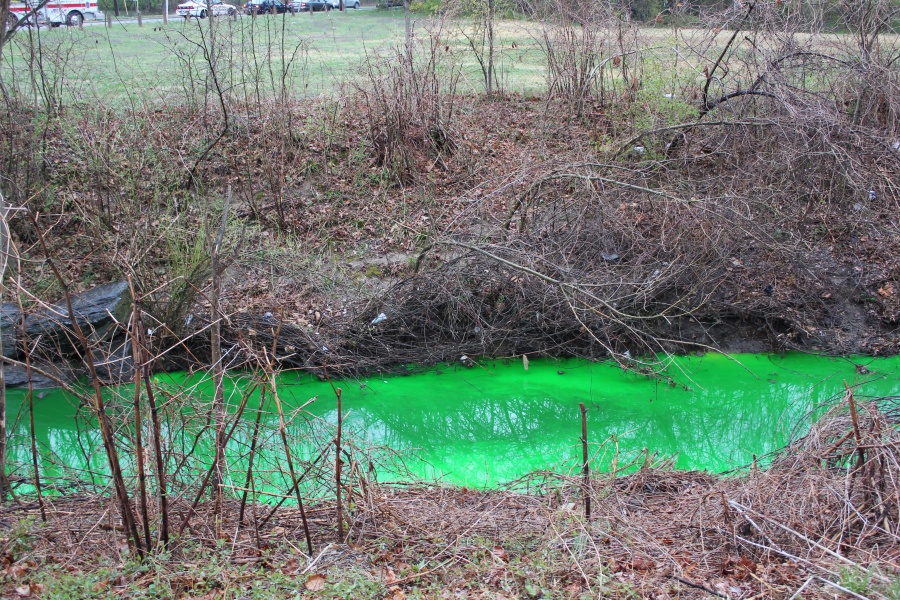
Slightly further upstream.

Once again, a company upstream dumped a whole bunch of stuff down the storm drains that flowed directly into our stream. This seems to happen every couple of months, which is frustrating (to put it lightly) to those of us working hard in town to clean up the stream and reestablish a viable ecosystem. Yesterday, people walking home through the park were treated to a neon green stream, full of what initially looked like a heckuva lot of antifreeze. Three hours later, the County hazmat team determined that it was “only” dye. Dye used to test the boiler system at “Building 4” of the office buildings two blocks away, apparently. How that dye was dumped into the storm drains rather than legally disposed of remains a mystery; the company seems to be claiming “faulty valve,” but I find it hard to imagine the location of a valve between the interior sewer system and the exterior storm drains. The Department of Environmental Resources is looking into it, and we hope to have more information soon. At the least, the NO DUMPING signs need to be touched up on the storm drains in the area.


The view from Adelphi Road, the entry point.


The view from two blocks downstream.

Although the dye is categorized as “non-toxic,” it’s still no small matter for the stream. After being in the water less than an hour, the dye lowered the stream pH from its normal (healthy) level of 7 to a much more acidic level of 4. At that level nothing but bacteria can live in the stream: adult fish die and the smaller invertebrates on which they depend die as well. It’s not clear how long it will take the stream to revert to normal: while the dye wasn’t as neon, the stream was still dark green at noon today at a point about a half mile downstream. Having just seen several pairs of ducks returning to the stream (not to mention grackles, thrushes, flickers, several kinds of sparrows, and phoebes), I’m hoping the rainwater will wash things through and the streambed will recover quickly.

It’s events like this that make us unlikely to just trust local developers to put adequate stormwater management and waste disposal plans in place when they propose to build highrises just upstream from our town. As the boy I encountered in the park last night said, “This goes to the Chesapeake Bay, right? Isn’t that really bad for the Bay?” Yes. Yes, it is.


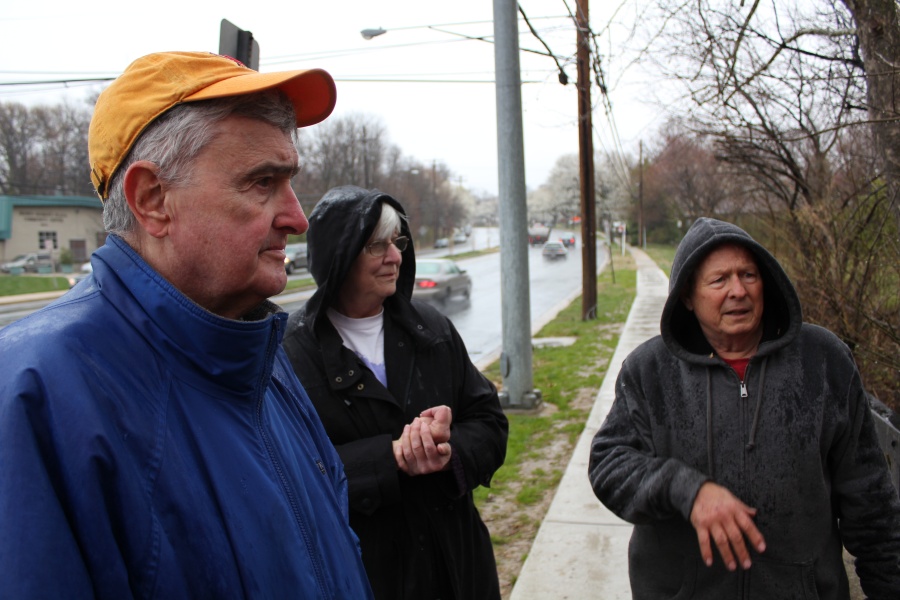
Town Council Members Mickey Lucas and Margaret Mallino talking with Stream Committee Chair Tom Stickles.

illegal dumping in our local stream

garden : going native

I have vowed that this will be the year we make progress on converting the yard and garden to native plants. This means saying goodbye to the orange daylilies, forsythia, dwarf almond, lilac, and crape myrtle sprout (the large one can stay for now). Wait wait, you might be saying: most of these are popular, non-invasive, flowering garden shrubs. Yes, most of them are. However: I am allergic to forsythia and my partner is allergic to lilacs, and both of these are scrubby plants in less than ideal locations, which is also true of the dwarf almond. I do plan to dig up and give away the lilac and crape myrtle, and I suppose I could do the same for the other two (if anyone wants them). Certainly there will still be plenty of opportunities to see forsythia, lilacs, and myrtles just on our block, let alone in the neighborhood as a whole. Also true of the daylilies, which are best categorized as an invasive weed despite their cheery profusion. We are keeping the ornamental quince, as it produces fruit that the local wildlife like (yay, possums!).

So, yes, going native means replacing some perfectly decent shrubs. Replacing being the key word, and where the fun starts. I have been longing for more bird-friendly shrubs ever since we moved in. We are doing well with the trees, as the yard includes: native black cherries, American hollies, dogwoods, red maples, mulberries (which are destined to disappear in a later phase that involves actually hiring people), and a sweet gum tree (technically in the neighbor’s yard, but along our property line). With the addition of some wildlife-friendly shrubs, I hope to see more nesting species or migrating songbirds and fewer insects. I’ve been using the American Beauties website and the notes of a dedicated wildlife gardener to sketch out a plan for the yard that I hope will also add some winter structure (which the front in particular is sorely lacking).

The first thing I did to further this plan was replace the dead rhododendron in the shady foundation bed. I had already decided that I wanted an Oakleaf hydrangea; I went to my local nursery planning to just look at the options and (of course) came home with one. In a rare instance of planning and action, I planted it out before the maple tree leafed out and the day before the spring rains started in earnest. It’s happily leafing out and I’ve left it plenty of room to grow.

My plans for the rest of the yard are not firm, but they involve a couple of major changes. We really need to grade the side yard the property line to address the downhill flow of water to (and through) our foundation wall, and I want to use that project as an opportunity to replant that entire space as a mix of new shrubs and the perennials I already have in other spots in the yard. I’d also like to add a shrub or two into the sunny foundation bed; as much as I like the perennials, the winter landscape looks too lopsided with the shrubs and tree on the right and nothing but scruffy seed heads on the left. I’d also like to add some woody herbs (rosemary, sage, another lavender) to the sidewalk bed, along the top of the bed that’s currently a row of (clumping) daylilies; I plan to move those to replace the row of invasive orange ones.

So, what will all these shrubs be? At least two will be varieties of Winterberry, as a male is needed for good fruiting. I’m thinking that one (or maybe two, depending on size) will go at the end of the sunny bed next to the porch to provide some screening once they reach full height (I’m planning to put the male in the backyard, beside the stairs to the basement and underneath the sassafras and dogwood; hopefully that will be proximate enough for fertilization). I’ll add at least one more Oakleaf hydrangea, and possibly two; probably another large specimen to replace the forsythia and a shorter variety in the side yard or at the end of the sidewalk bed. At least one Clethra will go in the sidewalk bed and possibly also in the sunny foundation bed as a complement to the other butterfly-attracting plants there. Native viburnums are the other category of shrub to be worked in. I need to do some more research, but I’m thinking a small variety like Arrowwood for the side yard and a taller variety like Blackhaw for the other corner of the back wall to replace the dwarf almond. (The stretch in the middle of the wall is going to become a raised bed, planted with herbs or for use by the kid in future years or both.)

Again this year, I’m not planning anything for the rear yard where the fence needs to be replaced, so the focus is on the front. The goal is to increase the aesthetics, add some winter structure, and last but most important, increase the cover and food for birds and small wildlife. I would love to see more migrating birds stopping in our yard, particularly songbirds. I’ve spotted several varieties of vireo and warbler over the years we’ve been here, and I imagine many more went unnoticed. Attracting them to shrubs closer to the windows would be great!
garden : going native

garden : first spring flowers


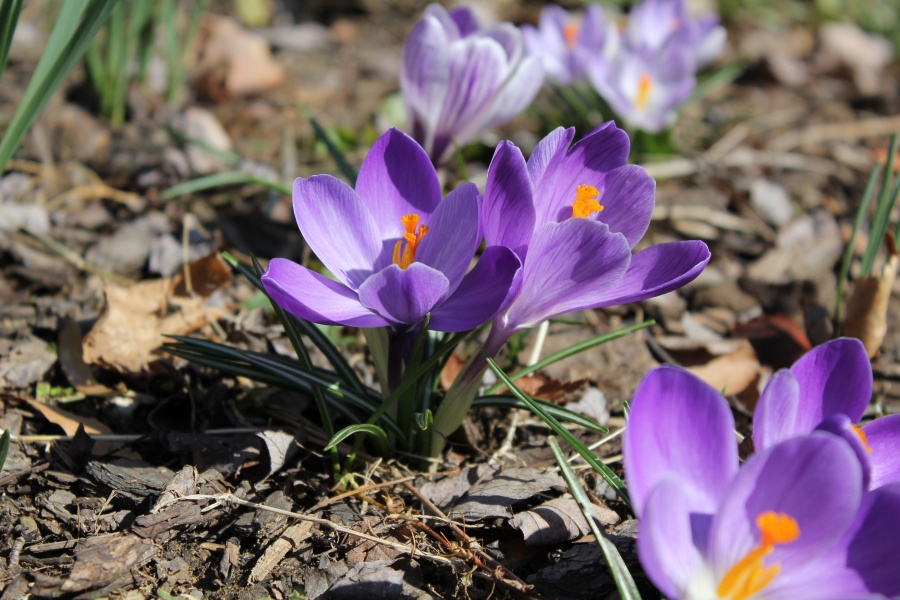
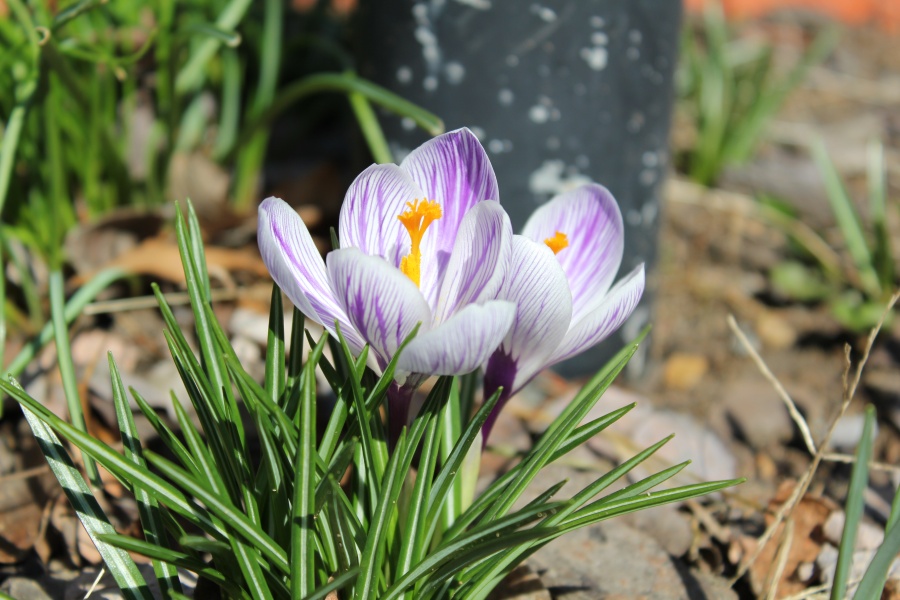
Purple crocuses.


White and purple crocuses.

After several years of hoping, my crocus bed is now full of crocuses! It’s nice to be greeted at the sidewalk steps by perky little flowers when returning from our walks. The daffodils are budding, and we have the first flower along the side of the house. I’m going to do my best to map the types we have this year in order to better group and arrange them in future seasons. That requires brain power, though, so don’t hold your breath.


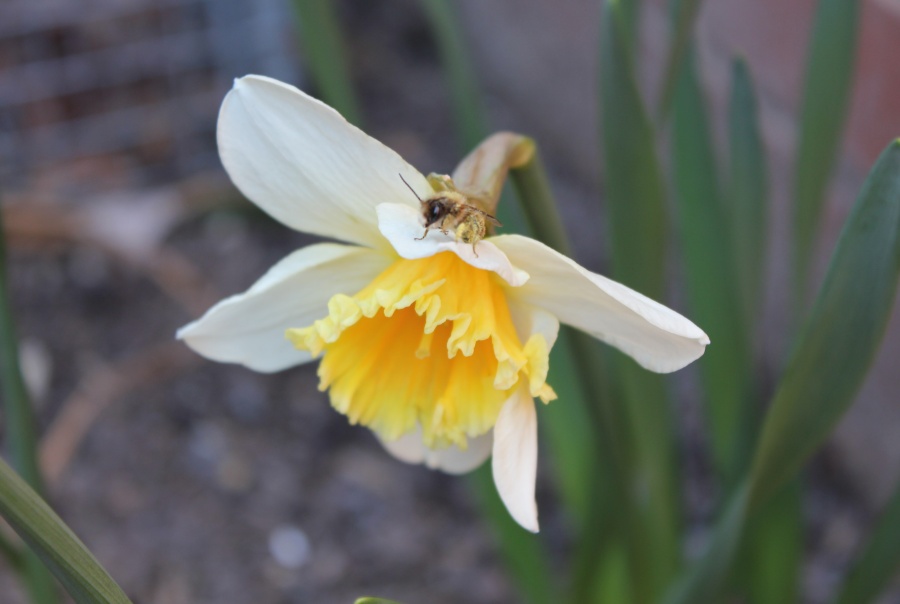
First Ice Folly daffodil with a very cold, possibly dead, bee on it.

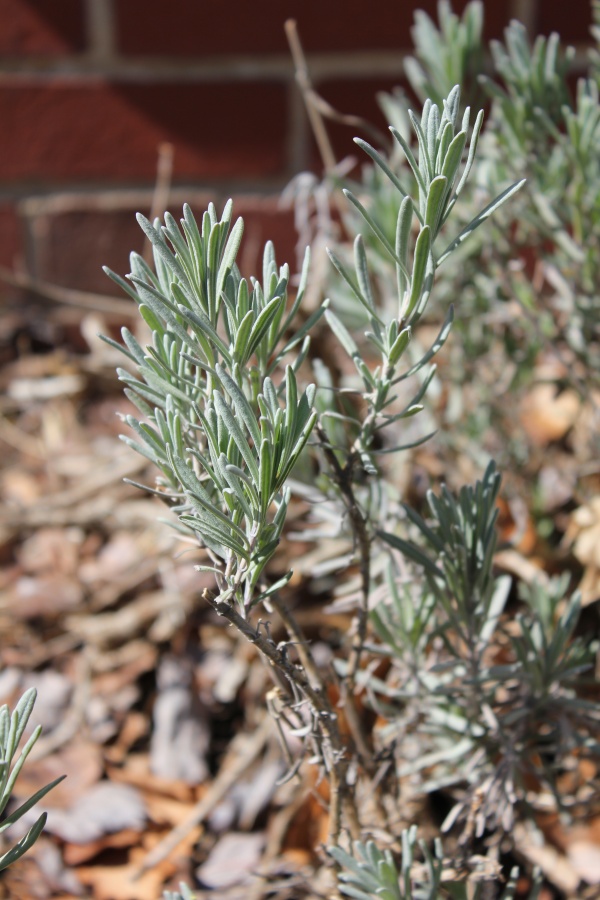
In making the inspection of the front beds, the biggest casualty was the lavender. I suspect that most of the stress actually happened last year during our two blizzards when it was buried under feet of snow and ice. Nonetheless, the die-off this year was bad and I had to prune nearly half the plant. (It probably didn’t help that I failed to appropriately prune it in the fall.) That was sad, but what’s left is healthy and I’m hoping it will bush out again this year. The front sidewalk bed is in decent shape, with everything coming up green. I’ve decided that this is the year I am going to really move ahead with converting the yard to natives and a select few non-invasives. More about this in a later post, but what this means for the sidewalk bed is bye-bye orange daylilies. You’re cheery and hardy and send up green shoots nice and early, but you are one of the devils of the Southeast and you need to go!


Healthy lavender sprig, post- massive pruning of dead bits.


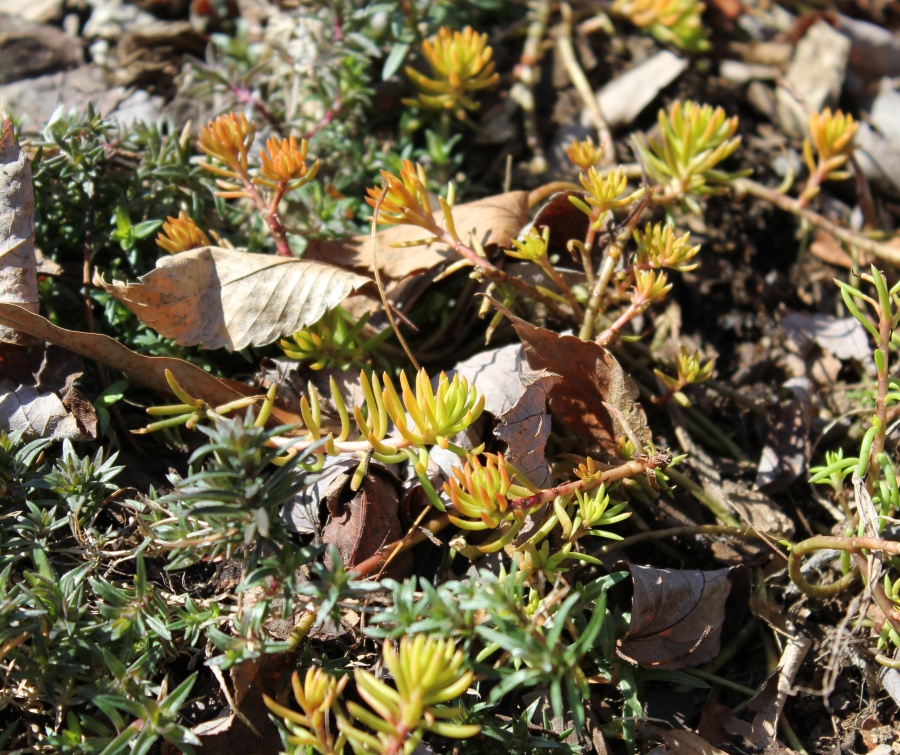
Sedum growing into phlox.

garden : first spring flowers

birds : Philadelphia Vireo in the backyard

I just spotted a new life bird, a Philadelphia Vireo, moving through the trees in my backyard, a gift of both the fall migration and the weather being cool enough for me to open the blinds while I sit at the computer. It stayed long enough for me to make it outside with both the binoculars and the book and confirm the identification; two windowpanes and a screen introduce a fair amount of uncertainty into these things.

I had just the other day been trying to determine if I had the oomph for any kind of birding, as it’s something I’ve missed this summer what with the heat and the not being able to walk very well and barely being able to open my eyes in the early hours which are ideal for birding. Now that the migration’s on, though, I could probably make it to the lake around 4pm at least once and just see what’s around. Or, I could continue to just look out the window and let the birds come to me!

birds : Philadelphia Vireo in the backyard